

Professional Grading and Mulching Services in Central Illinois
A beautiful, healthy landscape requires more than just well-placed plants and neatly trimmed grass; it depends entirely on the ground beneath it. If your yard slopes toward your house, you are constantly battling muddy puddles, flooded basements, and foundation damage. If your garden beds lack a protective layer, your plants are constantly fighting off aggressive weeds, summer heat stress, and winter root freeze.
At DC Tree & Landscaping, we provide professional ground grading and premium mulching services for properties throughout Central Illinois. For over 30 years, we have helped homeowners and businesses correct destructive drainage issues, smooth out uneven terrain, and lock in vital soil nutrients. Whether you need your entire backyard re-pitched to safely direct water away from your foundation or a fresh, deep layer of mulch applied to elevate your curb appeal, our experienced team delivers long-lasting, heavy-duty results.
Why Professional Land Grading is Crucial for Your Property
“Grading” refers to the mechanical process of leveling, sloping, or contouring the dirt on your property. In Central Illinois, where heavy clay soils hold water and seasonal rains can drop inches of water in a single afternoon, having a properly graded yard is the single most important defense against water damage.
When a yard has a “negative grade” (meaning the ground slopes down toward the house instead of away from it), rainwater has nowhere to go but directly against your foundation walls.
The Real Dangers of Poor Yard Grading
Ignoring a poorly pitched yard leads to expensive, compounding problems over time:
- Basement Flooding and Water Intrusion: Water pooling against your foundation easily seeps through porous concrete blocks, leading to damp basements, ruined drywall, and persistent mold growth.
- Foundation Cracking and Settling: When heavy clay soil near your house becomes saturated, it expands and puts immense hydrostatic pressure against your basement walls. When it freezes in the winter, that expansion can crack your foundation, requiring tens of thousands of dollars in structural repairs.
- Lawn Drowning and Mud Zones: Low spots in the middle of a yard trap water for days after a storm. These stagnant pools drown grass roots, attract mosquito swarms, and turn your lawn into an unusable mud pit.
- Hardscape Damage: Water pooling under or around concrete patios, driveways, and retaining walls causes the base material to wash out, leading to sinking, cracking, and shifting concrete.
How We Fix Drainage Issues with Precision Grading
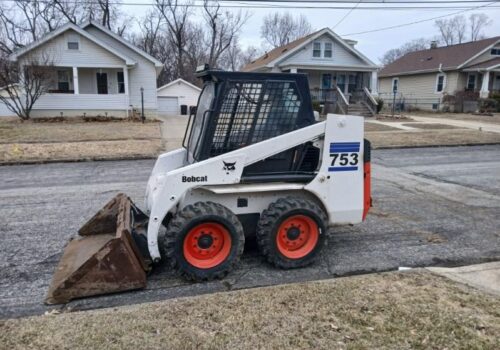
We do not just push dirt around and hope for the best. We use specialized equipment—including skid steers and laser-guided grading tools—to systematically reshape your land.
- Foundation Re-Pitching: We build up the soil directly around the perimeter of your home and taper it downward, creating a “positive grade.” This ensures that gravity naturally pulls rain and gutter runoff safely away from your foundation walls.
- Swale Creation: For properties that receive heavy runoff from neighboring yards, we can cut shallow, gently sloping channels (called swales) into the grass. These hidden valleys catch the water and discreetly funnel it away toward the street or a rear storm drain without ruining the look of your lawn.
- Lawn Leveling and Smoothing: We scrape away high bumps, fill in deep ruts and low spots, and lay down fresh, screened topsoil so your yard is smooth, easy to mow, and ready for fresh seed or sod.
The DC Tree & Landscaping Difference: Owner-Operated Quality
Grading near a home foundation and spreading yards of heavy mulch requires precision, hard work, and deep respect for the property. Many homeowners have had their siding scratched or their lawns torn up by heavy equipment operated by rushed, inexperienced crews.
With over 30 years of hands-on landscaping experience in Central Illinois, our owner-operator personally checks the laser-levels for your grading project, manages the heavy machinery to protect your turf, and ensures every yard of mulch is spread perfectly. We use lightweight, turf-friendly machines and protective ground mats to ensure that we solve your landscape problems without creating new ones in the process.
Secure Your Foundation and Beautify Your Yard Today
Do not wait for a flooded basement to realize your yard needs grading, and stop spending your weekends pulling weeds from unprotected flower beds. Protect your property value and enhance your curb appeal with professional grading and mulching services from local experts.
Call DC Tree & Landscaping today at 309-835-3846 to schedule your free, no-obligation estimate.
Frequently Asked Questions About Grading and Mulching
How often should I have the mulch in my yard replaced or refreshed?
For the best appearance and maximum weed control, we recommend refreshing your mulch once a year, typically in the early spring. A fresh 1-to-2-inch top-off replenishes the vibrant color, replaces the material that decomposed over the winter, and reinforces the weed barrier.
Will grading my yard ruin my existing grass?
If we are simply fixing a small low spot, the impact is minimal. However, if we need to completely re-pitch the grade along your foundation or cut a new drainage swale through the yard, the existing grass in that specific area will be removed. We finish all major grading projects by laying down fresh, screened topsoil so the area is perfectly prepped for you to immediately reseed or lay new sod.
My yard is completely flat, but holds water. Can grading fix that?
Yes. A yard that appears perfectly flat to the naked eye often has subtle dips and depressions that trap water. By bringing in fill dirt and using laser-guided grading equipment, we can establish a very slight, imperceptible slope (usually dropping just 1 inch for every 10 feet of distance) that allows water to drain naturally without making your yard look like a hill.
Can you put mulch around the foundation of my house?
Yes, but it must be done carefully. We always ensure that the ground beneath the mulch slopes away from the foundation. More importantly, we keep the mulch line a few inches below the bottom of your siding. Piling mulch up so that it touches wood or vinyl siding creates an easy bridge for termites and ants to enter your home.
Our Professional Mulch Installation Process
Dumping bags of mulch onto old, weed-filled beds often causes more harm than good. “Volcano mulching”—the common mistake of piling mulch high up against the trunk of a tree—traps moisture against the bark and eventually causes the tree to rot and die. We follow a strict, professional installation process to ensure your plants thrive.
Superior Moisture Retention
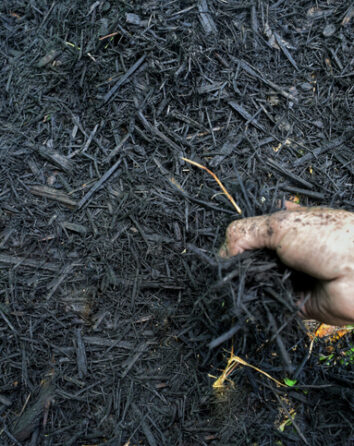
During the scorching, dry Midwest summer months, the sun bakes exposed soil, causing moisture to evaporate rapidly. A thick, 2-to-3-inch layer of organic mulch acts as a protective shield, trapping water in the soil where roots can absorb it. This dramatically reduces the need for constant watering and keeps your plants hydrated during drought conditions.

Natural Weed Suppression
Weeds aggressively compete with your flowers and shrubs for water, sunlight, and nutrients. A proper layer of mulch blocks sunlight from reaching dormant weed seeds buried in the soil, physically preventing them from germinating and breaking through the surface.

Temperature Regulation (Insulation)
Central Illinois experiences wild temperature swings, from 100-degree summer heat waves to sub-zero winter freezes. Mulch acts like a thick blanket for your soil. It keeps root systems cool and insulated during the summer heat and protects delicate roots from freezing solid during harsh winter snaps.

Soil Enrichment and Erosion Control
As organic mulch (like shredded hardwood or cedar) slowly breaks down over the seasons, it releases rich, essential nutrients back into the dirt, naturally fertilizing your plants. Furthermore, a heavy layer of mulch absorbs the hard impact of falling rain, preventing your expensive topsoil from washing away down the driveway.